Rising National Debt Is Changing the Investment Landscape
Government debt is usually discussed as a question of public finances. How much is a country borrowing? How large is its deficit? And at what point does its debt become difficult to sustain?


Government debt is usually discussed as a question of public finances. How much is a country borrowing? How large is its deficit? And at what point does its debt become difficult to sustain?

Financial markets have spent decades becoming faster, cheaper and more accessible. The next frontier appears to be time itself.
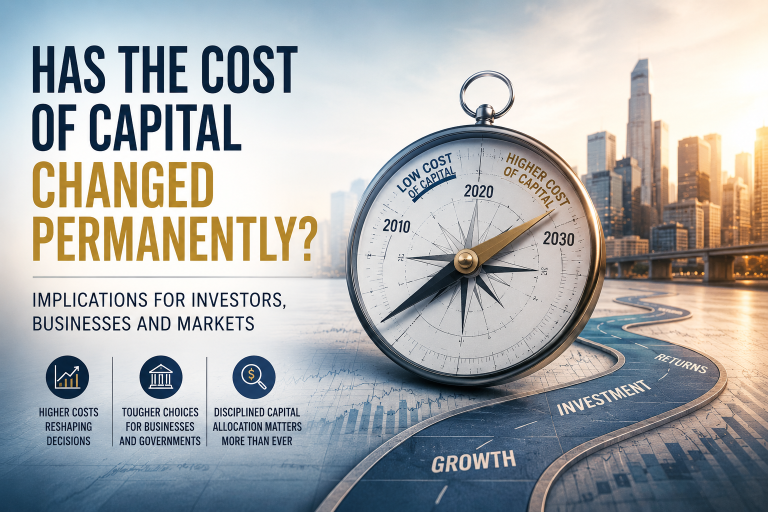
After more than a decade of ultra-low interest rates, investors are increasingly asking whether capital has entered a fundamentally different era, and what that means for markets, businesses and long-term investment decisions.

For decades, public markets were the primary arena in which investors accessed the scaling phase of many of the world’s most important companies.
Today, that model is becoming less straightforward, with companies such as SpaceX, OpenAI, and Stripe having already reached enormous scale before most public-market investors can access them directly.
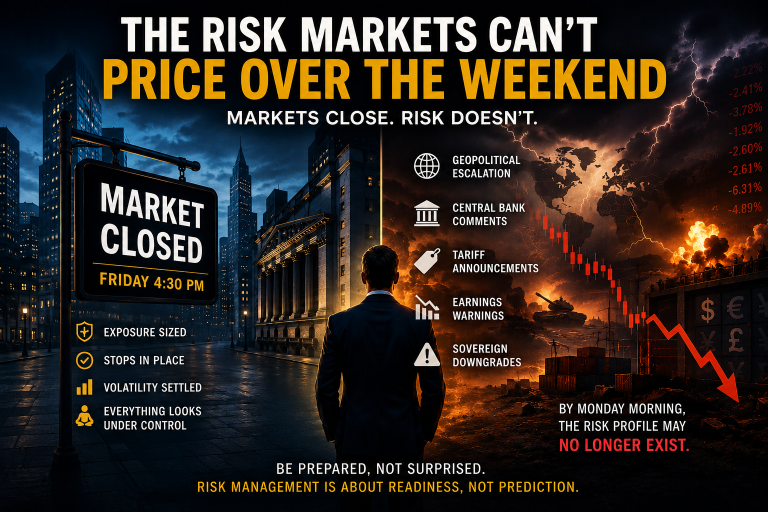
By Friday afternoon, most investment positions feel under control. Stops are in place, exposure has been sized appropriately, and volatility has often settled after a busy trading week. Psychologically, many investors begin to wind down alongside the market.
The problem is that markets close, but risk does not.
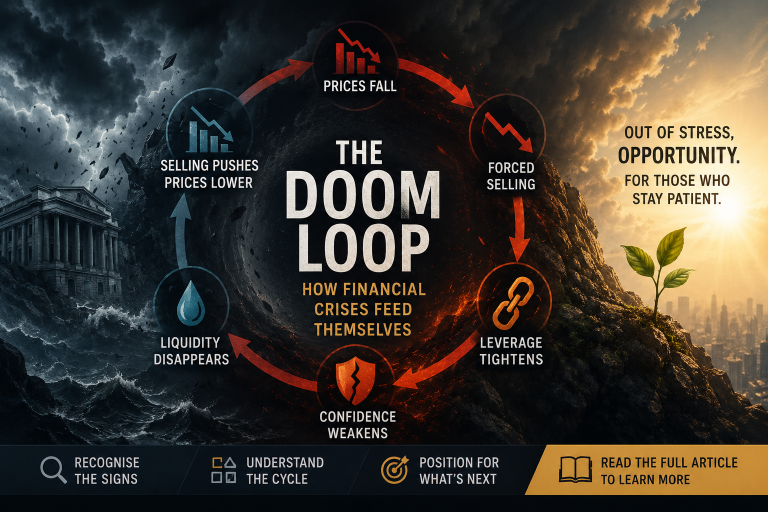
Most investors do not notice a doom loop when it begins. At first, it just looks like volatility, a difficult week for bonds, tighter funding, or a few forced sellers trying to raise cash. The danger begins when these small stresses start connecting. What initially looks manageable can become more dangerous when pressure in one area starts forcing reactions elsewhere.
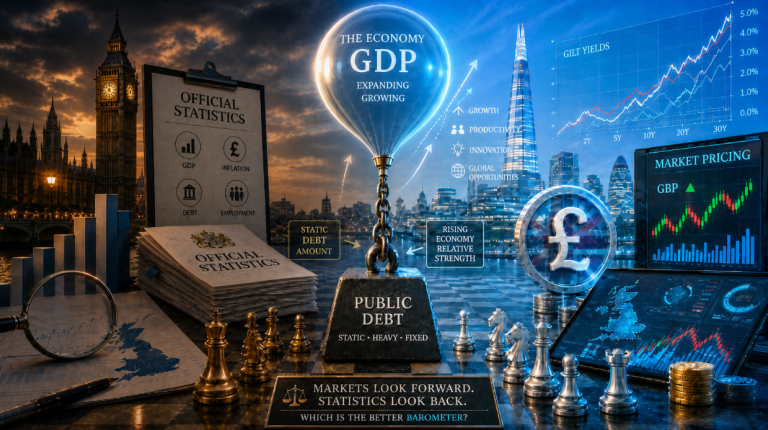
Official economic data is meant to give investors, policymakers and the public a shared view of reality. GDP, inflation, borrowing, debt and employment figures shape everything from fiscal policy to gilt yields, sterling and portfolio positioning.

The GameStop saga was more than a meme-stock frenzy. It was a live stress test of market structure, liquidity, positioning, and investor behaviour, and its lessons still matter today.

Markets do not reprice in response to events. They reprice because of how those events propagate through the system.
The recent escalation in Middle East tensions and the resulting disruption to flows through the Strait of Hormuz are a case in point. At face value, this is an energy shock. In reality, it is a multi-channel transmission event with implications that extend well beyond oil.
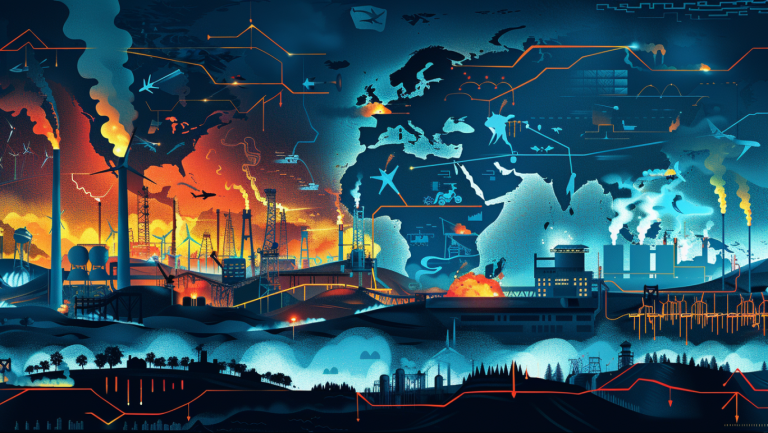
Markets often treat energy as just another commodity when in reality; it is something far more fundamental.
Every major expansion in civilisation, from the Industrial Revolution to the age of globalisation, has followed the discovery of more concentrated forms of energy. Coal powered industrialisation and oil powered the modern global economy.