
Author: Swati Kamble

  • Echoes of 2008? Tricolor’s Collapse and the Uncomfortable Parallels to Subprime Mortgages

    When Tricolor Holdings, a subprime auto lender in the US, collapsed into bankruptcy this September, many market participants dismissed it as an isolated failure. The company specialised in providing financing to borrowers with little or no credit history, packaging those loans into asset-backed securities (ABS), and selling them on to investors. The fraud allegations, including suggestions that collateral may have been pledged twice, seemed more like a potential corporate scandal than a systemic event.

  • Britain’s Borrowing Bind: Why Gilt Yields Refuse to Fall

    The UK now holds the uncomfortable distinction of having the highest long-term borrowing costs among G7 nations. Last week, 30-year gilt yields nudged above 5.6%, levels not seen since 1998. Even the 10-year gilt yield, the market’s benchmark, remains the highest in the group, signalling deeper structural and cyclical concerns.

  • Half of Gen X Faces a Pension Squeeze, and Women Fare the Worst

    For Generation X, retirement planning has often been described as a squeeze, and with good reason. Born between 1965 and 1980, Gen Xers sit awkwardly between two more fortunate cohorts: Baby Boomers, who largely benefited from generous defined benefit pensions, and Millennials, who have at least caught the tailwind of automatic workplace enrolment. Gen X, by contrast, missed out on both.

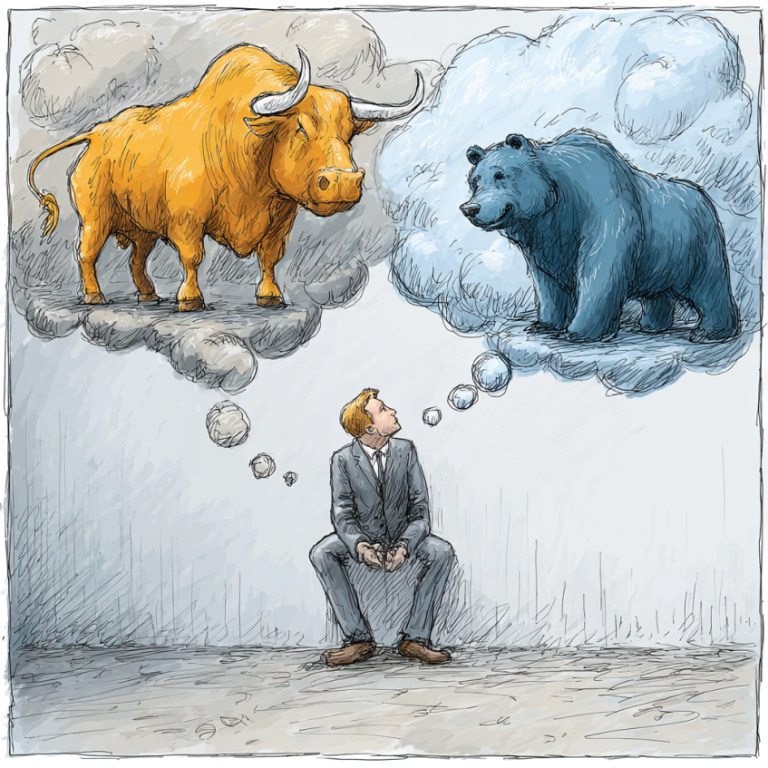
  • Mind Over Market: How Traders Maintain Discipline in Challenging Times

    Markets have a way of testing more than just strategies (as many traders can testify). They test patience, resilience, and above all, mindset. For traders and investors alike, it’s not always the volatility in prices that matters most – it’s the volatility in emotions. When uncertainty rises, mindset becomes the thin line between survival and self-sabotage.

  • UK Trading in 2025: Adapt or Get Left Behind

    A trader in 2020 could have made a killing riding the wave of meme stocks. The market was buzzing with retail enthusiasm, social media hype, and stimulus-fuelled volatility. But by 2023, the magic had faded, and the same buy-and-hold approach that worked in the chaos now delivered nothing but flat returns.

  • The 18-Year Investment Cycle: Are We Approaching the Next Shock?

    In the vast, noisy world of market predictions, few frameworks have persisted as stubbornly – and as eerily accurately – as the 18-year investment cycle. It’s a rhythm of boom and bust that has shaped global economies for more than a century, linking land values, credit expansion, and investor psychology into a pattern that often culminates in crisis.

  • Unleashing Animal Spirits or Lighting the Fuse?

    When UK Chancellor Rachel Reeves declared regulation a “boot on the neck of businesses” at the Mansion House dinner, she wasn’t just addressing City elites – she was firing the starting gun on a new era of economic risk-taking. Her sweeping pledge to roll back financial red tape wasn’t just a policy shift; it was a commitment to reform. It was an ideological pivot, aligning Britain with a broader global trend: the return of animal spirits.